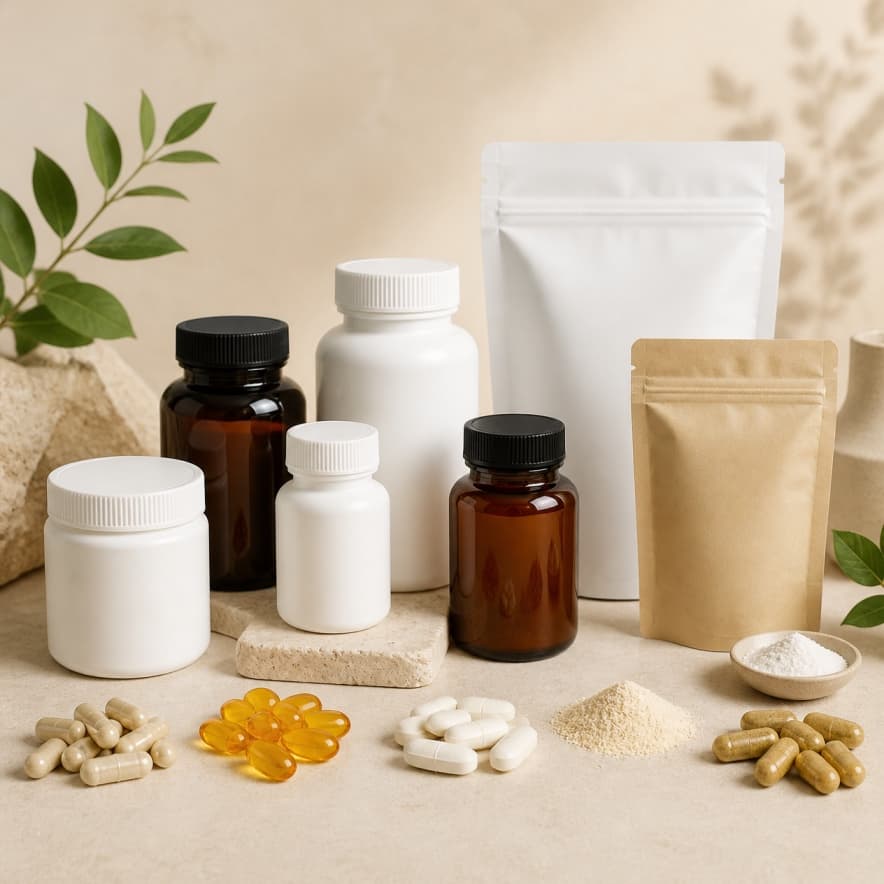
For an Australian brand, a herbal capsule or tablet made in India is usually a listed complementary medicine, regulated by the Therapeutic Goods Administration (TGA). Two things decide how fast you reach the shelf: whether every ingredient and claim is on the TGA's permitted lists, and whether your Indian manufacturing site can get GMP clearance. The listing itself is quick. GMP clearance is the long step, so plan it first.
This guide is for founders and product teams launching herbal supplements in Australia with a manufacturer in India. Giva Agro is a private labeller and bulk supplier of herbal supplements from Dehradun, so we explain what your Australian sponsor will ask us for, and what to check before you commit to a formula.
Is your product a medicine or a food in Australia?
Australia has no separate "dietary supplement" category. A product taken by mouth is regulated either as a medicine by the TGA or as a food under the Australia New Zealand Food Standards Code, enforced by the states and territories.
Usually a medicine: capsules, tablets and powders presented for a health purpose, such as most herbal supplements.
Often a food: products with a tradition of use as food in that form, such as herbal tea in a teabag, sold without therapeutic claims.
Not sure? Run your product through the TGA's Food-Medicine Interface Guidance Tool before you design the label.
A "dietary supplement" statement on the label does not make a capsule a food. The classification follows the ingredients, the claims and the way the product is presented.
What a listed medicine (AUST L) is
Listed medicines are the lower-risk tier of Australian medicines. The TGA does not evaluate each one before it reaches the market. Instead, the sponsor certifies that the product meets the rules, and the medicine carries an AUST L number on its label.
Ingredients must come from the Therapeutic Goods (Permissible Ingredients) Determination, and meet any conditions attached to each one.
Indications (what the product says it is for) must come from the Therapeutic Goods (Permissible Indications) Determination, word for word.
Assessed listed medicines (AUST L(A)) can carry higher-level claims, but the TGA assesses the efficacy evidence before listing. Most private label launches start with AUST L.
Who can list it: the Australian sponsor
The sponsor holds the entry on the Australian Register of Therapeutic Goods (ARTG) and carries the legal responsibility for the product. The sponsor must be an Australian resident, or a company carrying on business in Australia with a representative living there.
That means an Indian manufacturer cannot list your product. Your brand becomes the sponsor, or you appoint a specialist sponsor company. Either way, the sponsor applies to the TGA, and the manufacturer supplies the evidence.
Step 1: check every ingredient
Every active ingredient and every excipient, including the capsule shell, fillers and flow agents, must be in the Permissible Ingredients Determination. Many entries come with conditions, such as the plant part, the type of preparation, a maximum daily amount or a warning statement for the label.
Check each ingredient on TGA Business Services before you approve samples.
If an ingredient is not listed, you either reformulate or apply to the TGA to add it, which takes time and evidence.
Ask your manufacturer for the full formula: botanical name, plant part, extract ratio, extraction solvent and every excipient with its amount per dose.
Many ayurvedic formulas use ingredients that are well established in Australia. Others do not. Check before you design the label, not after.
Step 2: choose permitted indications
You cannot write your own claims for an AUST L medicine. You select indications from the permitted list, and the sponsor must hold evidence that supports each one. Some indications also require advisory statements on the label.
US or EU marketing copy rarely transfers as it is.
The same rules apply to your website, marketplace listings and social posts, under the Therapeutic Goods Advertising Code.
Step 3: GMP clearance for the Indian site
This is the step that sets your timeline. Before an overseas-made medicine can be listed, the sponsor must hold GMP clearance for each overseas site that manufactures it. The TGA's benchmark is the PIC/S Guide to GMP.
There are three routes:
Mutual Recognition Agreement (MRA): relies on an inspection by a regulator Australia has an agreement with, inside that regulator's own country. It does not apply to sites in India.
Compliance Verification (CV): a desk review of recent inspection evidence from another regulator whose GMP standard the TGA accepts.
TGA inspection: the TGA inspects the site itself and issues GMP certification.
For listed medicines, the TGA notes that evidence from other regulators is often not usable, because regulatory frameworks and GMP standards differ. In practice, an Indian site making listed medicines for Australia often needs a TGA on-site inspection, unless the TGA has already inspected it for the same kind of product.
Questions to ask your manufacturer before you choose a formula:
Has a TGA GMP clearance or certificate been issued for this site, and for which dosage forms?
Which regulators have inspected the site, and when?
Will the site sign an inspection agreement and host a TGA inspection?
Can it show the systems the TGA expects for listed medicines, such as ongoing stability testing, process validation and supplier qualification?
Many brands take a second route: they buy bulk herbal extracts from India and have the finished capsules or tablets made by a TGA-licensed manufacturer in Australia. What evidence that manufacturer needs for the extract depends on what you buy, such as a single extract or a ready premix, so agree it with them first.
Step 4: label and advertising
Labels for listed medicines follow Therapeutic Goods Order 92, the labelling standard for non-prescription medicines.
The AUST L number, the permitted indications and any required advisory statements must appear on the label.
All promotion, including online stores, Amazon listings and social media, must follow the Therapeutic Goods Advertising Code.
Your designer should work from the Australian rules, not adapt an EU or US label.
Step 5: list the product and import it
Once the formula, indications, label and GMP clearance are in place, the sponsor lists the medicine through TGA Business Services. Because the sponsor certifies compliance, the listing itself is quick. The TGA can review listed medicines after they reach the market, so the sponsor must keep the evidence on file.
The sponsor also imports the goods. Plant-based products must meet Australia's biosecurity import conditions, so check the product on the BICON system before the first shipment. Some plant materials need an import permit.
What it costs in TGA fees
TGA fees from 1 July 2026, in Australian dollars:
New listing application: $1,063 per product.
Annual charge: $1,566 per listed product.
GMP clearance application: $818 per manufacturer, per site, per sponsor.
Compliance verification (instead of an inspection): $3,130.
TGA inspection of an overseas site: $1,748 per hour per inspector, plus travel and accommodation.
Add sponsor, label and testing costs on top. A TGA inspection is the largest variable, so ask early whether one will be needed.
Documents your manufacturer should provide
Your sponsor will ask the manufacturer for evidence. From us, a sponsor can expect:
Full quantitative formula, with botanical names, plant parts, extract ratios and every excipient.
Specifications for each ingredient and for the finished product.
A certificate of analysis (COA) with every batch, including heavy metals and microbiology.
Stability data to support the shelf life on the label.
GMP certificates and site information for the clearance application, shared under NDA.
Label dielines, with the artwork prepared by your designer to Australian rules.
Export documents for each shipment, including the commercial invoice, packing list and certificate of origin.
Our guide on how to read a certificate of analysis explains what each test result means.
A realistic timeline
Weeks 1 to 4: choose the formula, check every ingredient and indication, and receive samples (7 to 10 working days from us).
Months, not weeks: GMP clearance for the Indian site. If a TGA inspection is needed, this is the longest part.
In parallel: label design to Therapeutic Goods Order 92, and sponsor set-up on TGA Business Services.
After clearance: listing, then production, then shipping and import.
Common mistakes
Approving a formula before checking every excipient, not just the herbs.
Reusing US-style claims that are not in the permitted indications.
Assuming an Indian or WHO-GMP certificate is enough on its own. The sponsor still needs TGA GMP clearance.
Leaving the GMP clearance question until the label is printed.
Forgetting the annual charge for each listed product when planning a range.
Frequently asked questions
Can an Indian manufacturer list the product with the TGA?
No. Only an Australian sponsor can hold the ARTG entry. The manufacturer supplies the formula, specifications, test results and GMP evidence.
Is an Indian GMP or WHO-GMP certificate enough?
Not by itself. The sponsor must obtain TGA GMP clearance for the site. For listed medicines, the TGA often needs its own inspection.
Are herbal teas listed medicines?
Usually not. Herbal tea in a teabag sold without therapeutic claims is generally a food. Use the TGA's Food-Medicine Interface Guidance Tool to check your product.
What is the minimum order for private label supplements?
From 500 units per product, or from 5 kg for bulk extracts and powders. Samples ship in 7 to 10 working days.
Related guides
Official sources
Planning a supplement range for Australia?
Giva Agro makes private label herbal supplements in capsules, tablets, softgels, powders and sachets, from a library of 500+ formulas, and supplies bulk extracts for brands that finish in Australia. Send us your product list and target claims, and we will tell you which formulas fit the Australian ingredient lists and what evidence your sponsor will get from us.
See our herbal supplement range or request a quote and samples.